
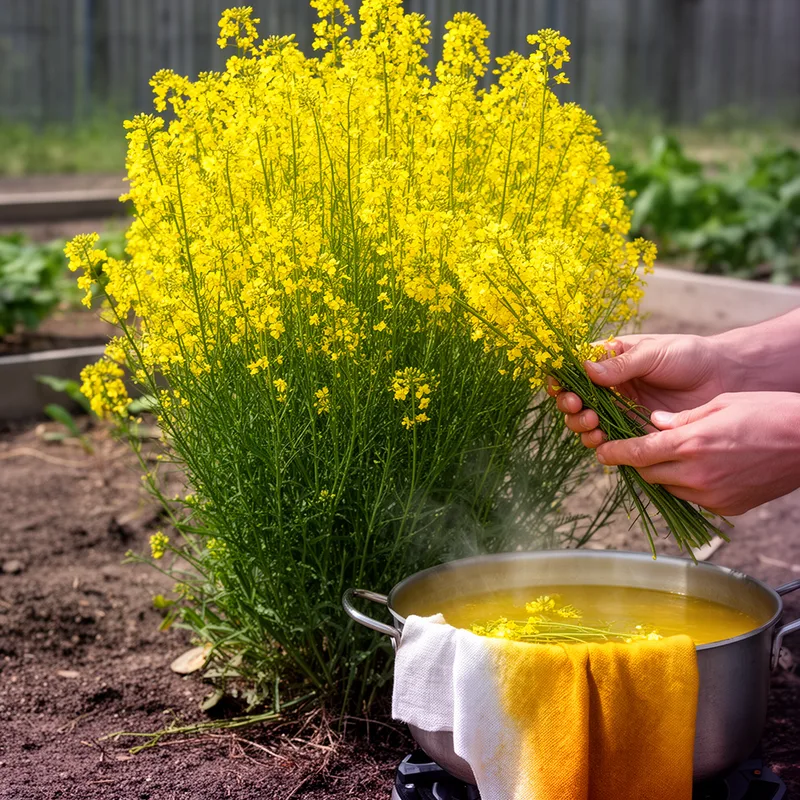
dyer's mignonette
- noun
- /ˈdaɪərz ˌmɪn.jəˈnɛt/
- UK
- The stems of dyer's mignonette were traditionally harvested for dye-making.
Examples
-
Dyer's mignonette has become naturalized in many parts of North America.
-
Gardeners sometimes grow dyer's mignonette for its historical significance as well as its bright flowers.
-
The dyer's mignonette is known for its vibrant yellow dye.
-
Many artisans use dyer's mignonette to create natural dyes.
-
The stems of dyer's mignonette are harvested to produce yellow dye used in fabric coloring.
-
Many artisans cultivate dyer's mignonette to create natural dyes for their craft projects.
-
In North America, dyer's mignonette has become a popular choice for those seeking natural dye sources.
Synonyms
 37
9.9
37
9.9

A small European plant used to make yellow dye
A European plant used to make yellow dye, also called weld
A plant people grow to dye cloth yellow

A plant from eastern North America with yellow flowers used to make yellow dye
Surface Forms
Morphology
dyer's + mignonette
If a B1 learner knows 'dyer' (a person who makes or applies dyes) and 'mignonette' (a plant), they can compose the meaning as 'the mignonette associated with dyers' — i.e. a plant used for dyeing. The possessive noun construction is regular and compositional in English, so the phrase's meaning is derivable from its parts.
Etymology
Dyer's mignonette gets its name from the people who dyed cloth: dyers used the small plant called mignonette to make a bright 'yellow dye'. That's why the name refers to a plant grown for dyeing and why it later came to grow in parts of North America.