

dog's mercury
- noun
- /dɒɡz ˈmɜːkjʊri/
- UK
- In spring the woodland floor was covered with dog's mercury under the tall oak trees.
Examples
-
Botanists identify dog's mercury by its paired leaves and small greenish flowers in shady woods.
-
Although beautiful in photos, dog's mercury is poisonous and can be dangerous to grazing animals.
-
Look at that dog's mercury!
-
I spotted a patch of dog's mercury in the forest.
-
In spring the woodland floor was covered with dog's mercury under the tall oak trees.
-
Botanists identify dog's mercury by its paired leaves and small greenish flowers in shady woods.
-
I spotted a patch of dog's mercury in the forest.
Synonyms
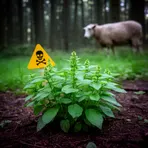
A plant with small green flowers commonly called dog's mercury that is poisonous

A common plant with greenish flowers that grows in shady woods

A group of small green plants that grow in woods in Europe and Asia, often called dog's mercury
Surface Forms
Morphology
dog's + mercury
The phrase names a specific woodland plant (Mercurialis perennis) whose meaning cannot be inferred from 'dog's' (a possessive of an animal) + 'mercury' (the toxic metal). The literal constituents suggest an unrelated idea (something belonging to a dog or the metal mercury), and botanical names are often arbitrary or historical, so a B1 learner who knows the words would not predict the plant sense.
Etymology
Dog's mercury gets its name because people long ago used dog before a plant name to mean 'bad' or 'poisonous', and mercury comes from the plant's old name. So the name gives a simple picture: a common woodland plant that is not good to eat and can be poisonous.

