
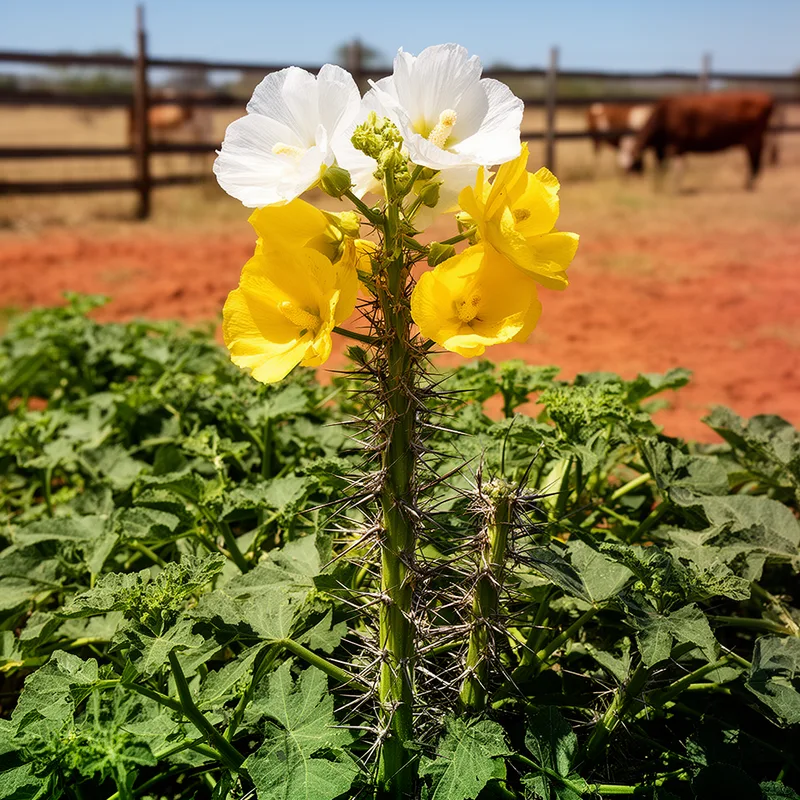
devil's fig
- noun
- /ˈdɛvəlz fɪg/
- US
- The field was overgrown with devil's fig, making it difficult to walk through.
Examples
-
The sharp thorns of devil's fig can injure livestock that graze nearby.
-
The devil's fig is known for its striking flowers.
-
Local farmers often remove devil's fig to prevent it from spreading to their crops.
-
Have you ever seen a devil's fig in bloom?
-
Farmers in the region often clear devil's fig from their fields to protect their crops.
-
The garden was filled with devil's fig, which made navigating it quite challenging.
-
Because of its spiny leaves, devil's fig can cause injuries to animals grazing in its vicinity.
Synonyms
A prickly plant with large white or yellow flowers that grows in tropical America
A plant with large yellow or white flowers and sharp stems and seed pods
A prickly plant with large white or yellow flowers
How Prickly


Surface Forms
Morphology
devil's + fig
The element 'fig' will cue a B1 learner that the phrase refers to a plant or fruit, and 'devil's' signals a figurative or negative modifier, so some general idea (a plant with an ominous name) is accessible. However the specific reference to the Argemone genus (not a true fig) and the detailed features (prickly leaves, pods, large flowers) are not derivable from the constituents, making the meaning only partially predictable.
Etymology
Devil's fig may come from a simple picture: the plant's round pods look like small figs, but they are covered in sharp spines and have a poisonous sap, so people added devil to warn of 'danger'. That's why devil's fig is used for a prickly, harmful wild plant today.