

devil's apples
- noun
- UK
- We found a field of devil's apples blooming near the village.
Examples
-
The legend claimed that devil's apples could cure mysterious illnesses.
-
The devil's apples grew abundantly in the garden.
-
Ancient herbalists often sought devil's apples for their supposed magical roots.
-
Have you ever seen a devil's apple before?
-
Ancient herbalists often sought devil's apples for their supposed magical properties.
-
According to folklore, devil's apples were used in potions and charms.
-
We found a field of devil's apples blooming near the village, their purple flowers enchanting all who passed by.
Synonyms
 1
9.9
1
9.9

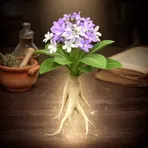
A plant with purple or white flowers and a forked root believed to have magical powers

A plant with purple flowers and a forked root thought to be magical and used as medicine
Surface Forms
Morphology
devil's + apples
The compound clearly combines 'devil's' + 'apples', so a B1 learner who knows both words would likely infer a folkloric or dangerous fruit/plant associated with the devil. However, the detailed botanical identity, physical description, and the historical belief in magical properties cannot be derived from the constituents alone, so the meaning is only partially predictable.
Etymology
Devil's apples may come from the bright yellow fruits that looked like small apples and from a strange forked root people used in old magic. Because people feared the plant, they linked it to the 'devil', so devil's apples came to mean a plant thought to have 'magical' powers.