

bear's foot
- noun
- /bɛrz fʊt/
- She warned that bear's foot should not be ingested because of its irritant qualities.
Examples
-
The garden's shade was dominated by a large bear's foot with its striking leaves.
-
Many gardeners avoid bear's foot due to its strong smell.
-
Botanists studied the unusual smell of the bear's foot growing wild in the woods.
-
The bear's foot plant can cause irritation if touched.
-
The gardener noted that the bear's foot emits a strong odor that can irritate the skin.
-
Before planting, he researched the bear's foot to understand its toxic effects on pets.
-
During their hike, they encountered a patch of bear's foot, which they recognized by its distinctive leaves.
Synonyms
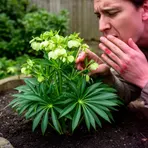
A garden plant with split leaves and a bad smell that can irritate if eaten

A plant with finger-like leaves and a bad smell that can make you sick if eaten

A plant that has green flowers, smells bad, and is poisonous if eaten
How Toxic


Surface Forms
Morphology
bear's + foot
The phrase literally reads as 'the foot of a bear', so a B1 learner who knows 'bear' and 'foot' would likely infer a shape resemblance (e.g. finger-like or digitate form). However, the precise identification as a particular hellebore plant and its unpleasant odor/irritant properties are not derivable from the constituents, so the meaning is only partially predictable.
Etymology
Bear's foot may come from the way the plant's leaves spread into several long, finger-like parts that look like a bear's foot. That's why the name came to mean this particular wild plant today.