
Anabaptist
- noun
- /ˌænəˈbæptɪst/
- So very early on you have, you know, the Lutherans in Germany and then you have the Anabaptists, many of whom get get wiped out early on.
Loading YouTube…
Watch on YouTubeSo very early on you have, you know, the Lutherans in Germany and then you have the Anabaptists, many of whom get get wiped out early on.
- So very early on you have, you know, the Lutherans in Germany and then you have the Anabaptists, many of whom get get wiped out early on.
Examples
-
Anabaptist churches in Europe and North America are in decline.
Blog text (28) -
Some of the names of the early Anabaptist traditions that still continue today.
-
Anabaptist traditions, history, and economic factors create important bonds between individuals and proximate communities (and, importantly, others in those proximate communities).
Academic text (2016) -
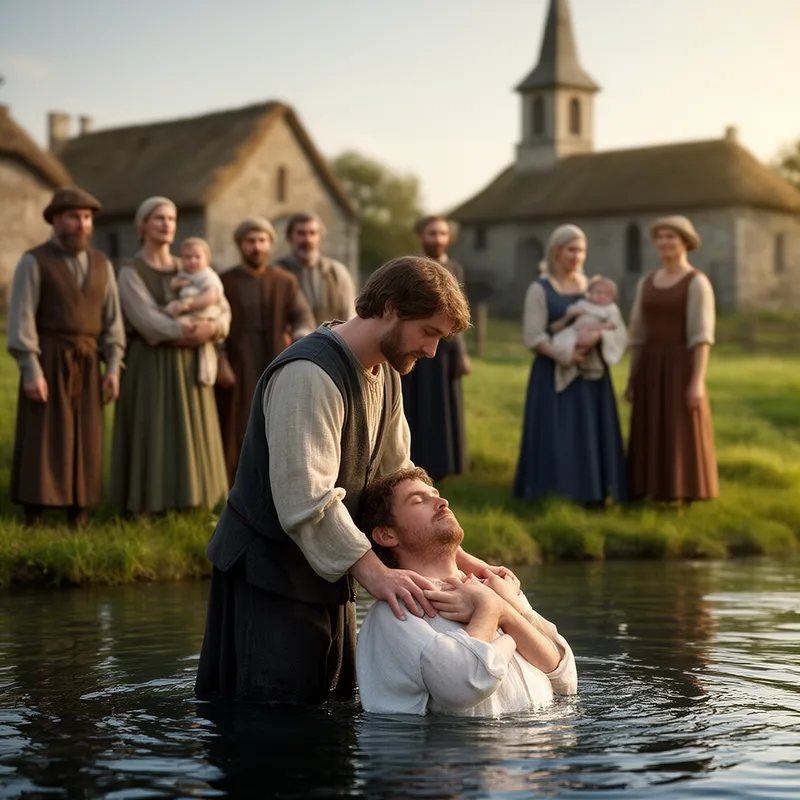
The Anabaptist movement gained followers by advocating adult baptism based on personal faith.
-
Many Anabaptist groups emphasize community living and shared resources among their members.
-
In the 16th century, Anabaptists faced persecution for their beliefs about baptism and church membership.
Compounds

A Christian group that does not baptize babies but baptizes only adults who say they believe
Surface Forms
Morphology
Etymology
Anabaptist comes from the parts ana- meaning 'again' and the same root as baptism meaning 'to baptize', so it literally means 'one who is baptized again'. That's why Anabaptists believed people should be baptized as adults, not as babies.

