
Tisha b'Av
- proper noun
- /ˈtiːʃə bʌʔˈɑːv/
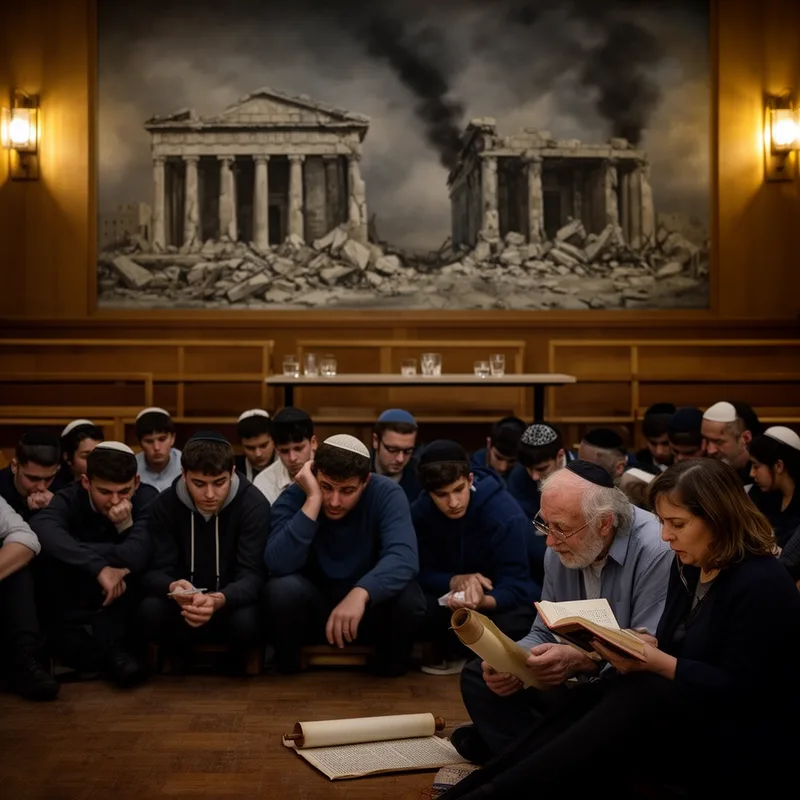
- Many synagogues hold special services on Tisha b'Av to mourn the destruction of the Temple.
Examples
-
Some communities read the Book of Lamentations aloud during Tisha b'Av observances.
-
Many Jews observe Tisha b'Av with fasting and prayer.
-
Jews traditionally fast and refrain from celebration on Tisha b'Av.
-
Is Tisha b'Av a day of mourning?
-
Jews traditionally fast and refrain from celebration on Tisha b'Av.
-
Many synagogues hold special services on Tisha b'Av to mourn the destruction of the Temple.
-
Some communities read the Book of Lamentations aloud during Tisha b'Av observances.
Synonyms

A Jewish day when people fast and mourn for the destruction of the Jerusalem temples

A Jewish fast day to remember the destruction of the temples in Jerusalem

A day when Jewish people fast and mourn the destruction of the ancient temples in Jerusalem

A major Jewish fast day when people mourn the destruction of the temples in Jerusalem

A major Jewish fast on the ninth day of Av that remembers the destruction of the temples in Jerusalem

A major Jewish day when people do not eat or drink to remember when the temples in Jerusalem were destroyed
A major Jewish day when people do not eat to remember when the temples were destroyed in Jerusalem
Surface Forms
Morphology
Tisha + b'Av
Tisha b'Av is a Hebrew proper name for a specific religious fast and its constituent forms are not English lexemes (both are listed as not found), so the meaning is culture-specific rather than compositionally derived from known English words. A B1 learner who knows English vocabulary would not be able to infer that this denotes a major Jewish day of mourning and fasting, making it non-transparent.
Etymology
Tisha b'Av comes from Hebrew words Tisha and b'Av, and it literally means 'the ninth of Av'. Many disasters, including the destruction of the First and Second Temples in Jerusalem, happened on that date, so Jewish people fast and mourn on Tisha b'Av to remember those losses.

