
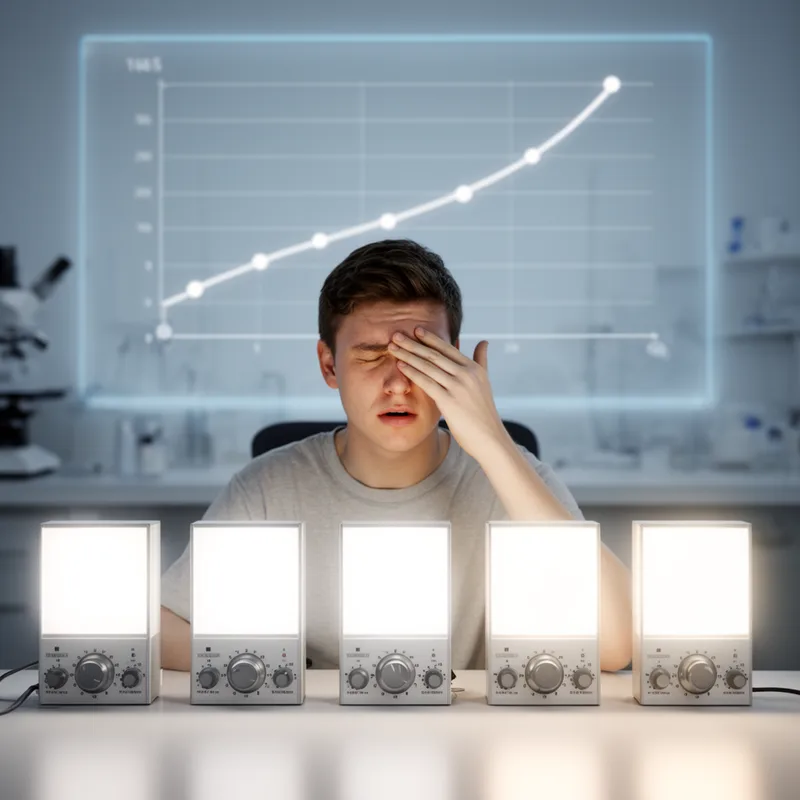
Stevens' power law
- noun
- /ˈstiːvənz ˈpaʊər lɔː/
- Specialized
- According to Stevens' power law, our perception of brightness increases with intensity.
Examples
-
In research on pain perception, Stevens' power law often provides a better fit than alternative models.
-
Stevens' experiments supported Stevens' power law rather than the older logarithmic model.
-
The psychology student explained Stevens' power law during her presentation on sensory experiences.
-
Have you studied Stevens' power laws in your psychology class?
-
In research on pain perception, Stevens' power law often provides a better fit than alternative models.
-
According to Stevens' power law, our perception of brightness increases with intensity.
-
The psychology student explained Stevens' power law during her presentation on sensory experiences.
Synonyms
A rule that says how our sense of things like sound or light grows when the physical signal gets stronger
Surface Forms
Morphology
This is an eponymous, technical scientific term: knowing the words 'Stevens', 'power' and 'law' does not let a B1 learner derive the specific meaning that perceived stimulus intensity grows as a power function of actual intensity. 'Power law' is a domain-specific mathematical/psychophysical concept and 'Stevens'' signals an author name, so the precise technical sense requires specialist knowledge rather than being compositionally predictable.
Etymology
Stevens' power law comes from psychologist S.S. Stevens, who ran experiments asking people to judge things like brightness or pain and found a simple math rule. The power part names the math rule and the law part means a general rule, so the name points to the idea that 'how strong something feels' grows by that power rule as the real stimulus grows.

