

St John's wort
- noun
- /seɪnt dʒɒnz wɜrt/
- Many people use St John's wort as a natural remedy for mild depression.
Examples
-
Many people use St John's wort as a natural remedy for mild depression.
-
Legend says St John's wort was hung over doorways to ward off evil spirits.
-
The bright yellow flowers of St John's wort bloom in midsummer across the countryside.
-
Many people use St John's wort to treat mild depression.
-
Have you heard about St John's wort as a herbal remedy?
-
Legend says St John's wort was hung over doorways to ward off evil spirits.
-
The bright yellow flowers of St John's wort bloom in midsummer across the countryside.
Synonyms


 1
9.0
1
9.0
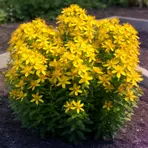
A group of plants with yellow flowers like St John's wort
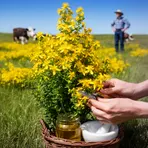
A plant with bright yellow flowers used as a medicine for mild depression and often a weed

A bushy plant from Europe and Asia with bright yellow flowers used in herbal medicine
Surface Forms
Morphology
St + John's + wort
The phrase is compositionally built from 'St' (Saint) + 'John's' (possessive name) + 'wort' (a plant), so a learner who knows those words will readily infer it refers to a plant associated with Saint John. This follows a common naming pattern (PERSON's + 'wort' = a plant named for that person), so the core referent is directly derivable even if specific species or medicinal uses require extra knowledge.
Etymology
St John's wort gets its name from St John because its bright yellow flowers bloom around St John's Day in late June. People used to hang the wort over doors to 'ward off' evil, so the name reminds us of its old use as a protective, healing plant.