

St. Elmo's fire


 1
9.9
1
9.9
- noun
- /seɪnt ˈɛlmoʊz faɪər/
- Specialized
- As the storm approached, we were amazed to see St. Elmo's fire flickering around the ship's mast.
- an electrical discharge
Examples
-
During the thunderstorm, St. Elmo's fire appeared above the church steeple, mesmerizing the onlookers.
-
"The most plausible theories for the Hindenburg disaster are: Structural failure, static electricity St. Elmo's fire, sabotage."
-
- I was pretty sure... it was St. Elmo's fire all along.
-
You've just been treated to a harmless display of St. Elmo's fire.
-
Thunderstorms deliver a negative charge to Earth in several ways: negative cloud-to-ground lightning flashes; quasi-DC point discharge currents such as St. Elmo's fire; conduction current; and negatively charged precipitation.
Academic text (1998) -
Pilots often report seeing St. Elmo's fire as an indicator of electrical activity in the atmosphere.
Synonyms

A blue or violet glow that appears on pointed objects during storms

A glowing electric light that appears on pointed objects like a ship's mast during storms
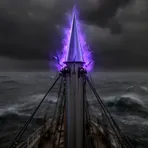
A bluish purple glow that appears on pointed metal parts like ship masts or airplane wings during storms

A blue or purple light that appears on pointed objects like ship masts during storms

A faint blue glow that appears on ship masts or airplane wings during storms caused by electricity in the air

A faint light that appears when electricity passes through air, like on antennas or wires
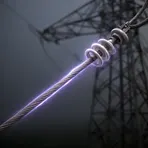
A faint glow around a high-voltage wire when the air becomes charged
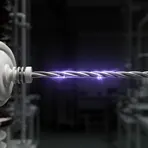
A faint glow of electricity around a high-voltage wire
Surface Forms
Morphology
St. + Elmo's + fire
The phrase is an eponymous proper-name + 'fire' where 'St. Elmo' does not describe the physical process; 'fire' suggests combustion but the phenomenon is an electrical bluish glow caused by ionization, not literal burning. A B1 learner who knows the parts would likely not infer the specific meteorological/electrical meaning from the constituents alone, so the expression is idiomatic and unpredictable from its words.
Etymology
The weather event St. Elmo's fire may come from old sailors who saw a blue glow on ship masts during storms and thought St. Elmo, their saint, was protecting them. Today the name means the blue electric glow you can see on pointed objects like masts or airplane wings in bad weather.