
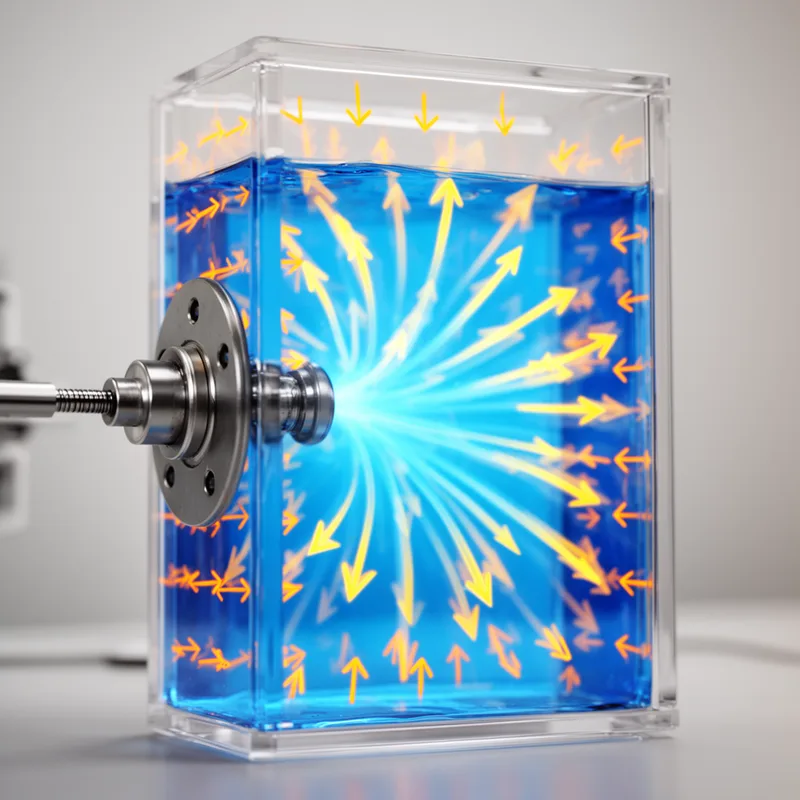
Pascal's law
- noun
- /ˈpæskəlz lɔ/
- Specialized
- Engineers rely on Pascal's law when designing equipment that uses fluid power.
Examples
-
Hydraulic systems such as car brakes operate based on Pascal's law.
-
According to Pascal's law, pressure changes in a fluid are transmitted equally.
-
According to Pascal's law, pressure in a fluid is transmitted equally in all directions.
-
Have you studied Pascal's law in your physics class?
-
According to Pascal's law, when a force is applied to a fluid in a closed container, the pressure increases uniformly throughout.
-
In hydraulic systems, Pascal's law allows for the amplification of force by transmitting pressure through the fluid.
-
She demonstrated Pascal's law by explaining how squeezing a balloon causes the pressure to increase in all directions.
Surface Forms
Morphology
Pascal's + law
The phrase is eponymous: knowing 'Pascal's' as a possessive proper name and 'law' as a scientific principle lets a learner infer this is a law associated with Pascal, but it gives no information about the specific content (pressure transmission in fluids). Because the overall technical meaning cannot be derived from the constituents alone, yet the construction signals an eponymous scientific rule, it is partially transparent.
Etymology
Pascal's law is named after the scientist Blaise Pascal and comes from a simple picture: when you press a liquid in a closed container, the push spreads to every part, like squeezing a water balloon so the force reaches all sides. So, Pascal's law means 'pressure is transmitted equally in all directions', which is why car brakes and other machines that use liquid power work.

