
Müllerian
- adjective
- /ˈmʊlɛriən/
- Specialized
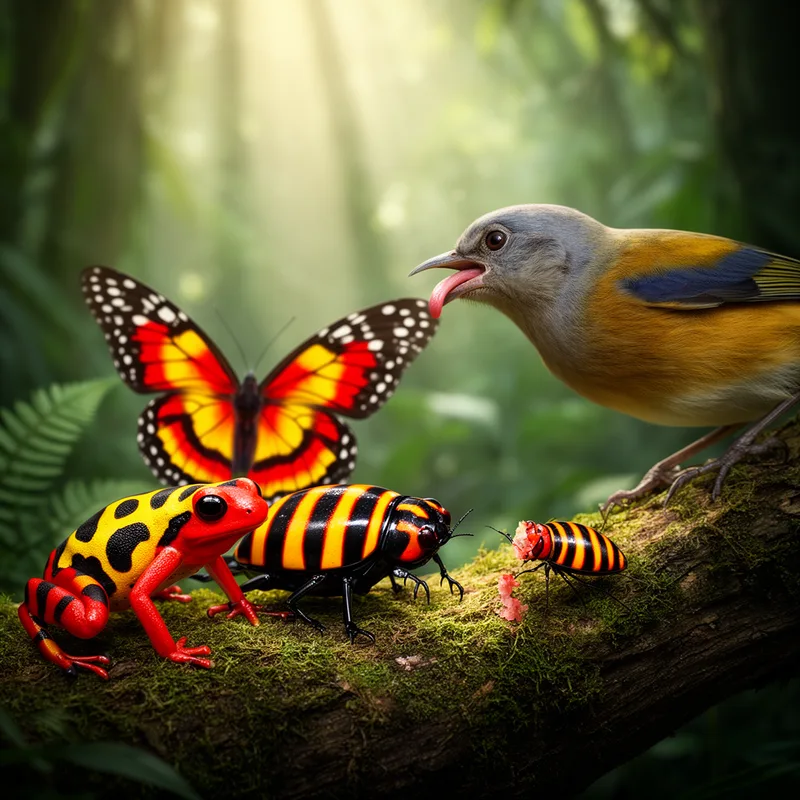
- Müllerian mimicry is an important concept in evolutionary biology that explains how harmful species share similar warning colors to avoid predation.
Examples
-
In the rainforest, several species of butterflies exhibit Müllerian coloration to signal their toxicity to potential predators.
-
Further mutualistic interactions, such as Müllerian mimicry, can also shape community structure depending on the co-occurrence of the mimetic patterns (Elias et al. 2008).
Academic text (2010) -
The study focused on how Müllerian mimicry among certain frogs enhances their survival by deterring animals that recognize their warning signals.
Surface Forms
Morphology
Müllerian = Müller (opaque) = Müller + ian
Formally formed from the surname 'Müller' + the adjectival suffix '-ian', but the meaning is eponymous and domain-specific (requires knowing which Müller), so it is not derivable by average learners.
Etymology
Müllerian comes from the name of a scientist, Fritz Müller, and the ending -ian which means 'related to'. He noticed that poisonous animals often share the same bright colours to warn predators, so Müllerian describes this kind of shared warning between harmful species.

