

Midsummer's Day


 1
3.7
1
3.7
- noun
- UK
- Many people hold festivals and bonfires on Midsummer's Day every year.
Examples
-
Before Midsummer's Day dawns, you'll ask me to kiss you again.
-
On Midsummer's Day.
-
Midsummer's Day is celebrated on Midsummer's Day, marking the midpoint of summer.
-
Traditionally, Midsummer's Day is a time for feasting and community gatherings.
Synonyms
 3
4.4
3
4.4
A traditional day on June 24 when people pay rent and other yearly payments
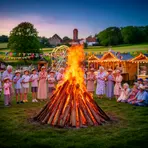
A traditional day around June 24 marking the middle of summer, often celebrated with bonfires and fairs

A festival on June 24 that celebrates the birth of St John the Baptist
Surface Forms
Morphology
Midsummer's + day
The meaning is directly derivable from the constituents: 'Midsummer's' (mid + summer) indicates the middle of the summer season and 'day' denotes the specific calendar day, so a learner who knows these words can infer it refers to the day in the middle of summer. This compositional pattern is common across languages (midsummer festivals/feasts), making the expression immediately comprehensible to a B1 learner even if they do not know the exact date.
Etymology
Midsummer's Day comes from old calendars that marked the 'middle of summer' and was kept on 24 June. Long ago people held fairs and family celebrations and often settled rents and contracts on that day, so today it means the traditional summer celebration and an important date in older customs.