
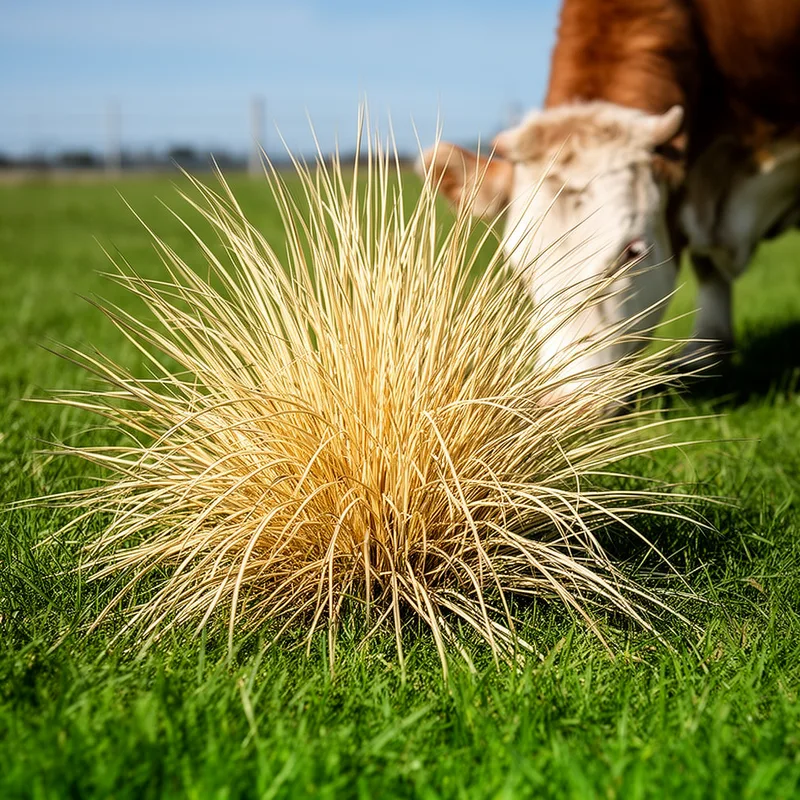
Medusa's head
- noun
- US
- The farmer pulled up a clump of Medusa's head that was invading his field.
Examples
-
Experts warn that Medusa's head can spread rapidly and outcompete native grasses.
-
Grazing animals tend to avoid Medusa's head because of its tough, bristly texture.
-
The garden was filled with Medusa's head grass.
-
Many farmers dislike Medusa's heads for their invasive nature.
-
Farmers have noticed that Medusa's head can quickly take over entire fields, choking out other plants.
-
Due to its sharp awns, Medusa's head is often left unbothered by grazing animals.
-
The weed known as Medusa's head is notorious for its ability to outcompete desirable grass species.
Synonyms
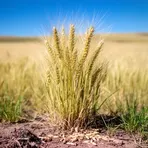
A wild grass with long sharp bristles on its seed heads that spread and harm fields
Surface Forms
Morphology
Medusa's + head
The name relies on a cultural-mythological image (Medusa’s snake-like hair) so a learner who knows 'Medusa' and 'head' can infer a resemblance to a rounded object with hairlike or bristling parts, but the leap from that image to a specific type of rye grass is metaphorical and requires world/cultural knowledge. Because the meaning is a figurative resemblance rather than direct compositional meaning and may be unpredictable for many B1 learners, it is only partially transparent.
Etymology
Medusa's head comes from a Greek story because the plant's long, bristly awns look like Medusa's snake-like hair and the head of the grass looks like a mass of snakes, so people called the plant Medusa's head and the name now means this 'weedy grass'.

