
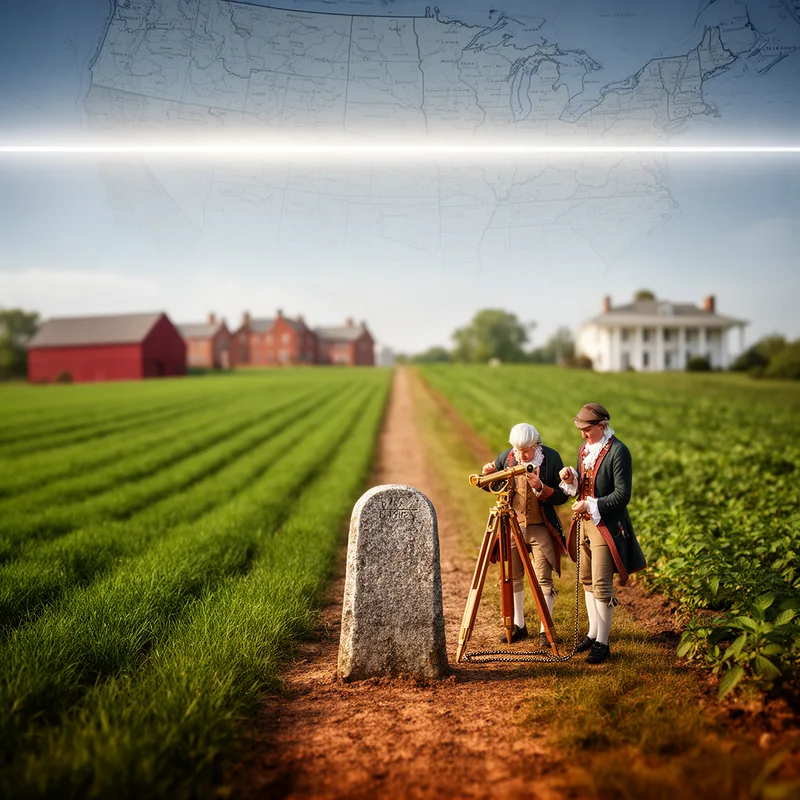
Mason and Dixon's line
- noun
- /ˈmeɪsən ənd ˈdɪksənz laɪn/
- US
- Slavery was largely prohibited north of the Mason and Dixon's line before the Civil War.
Examples
-
The survey work that established the Mason and Dixon's line began in the 1760s.
-
Many people still refer to the Mason and Dixon's line when discussing cultural differences between North and South.
-
The Mason and Dixon's line divided the North and South.
-
Many historians discuss Mason and Dixon's line in their books.
-
The Mason and Dixon's line is often cited as a historical boundary marking the divide between Northern and Southern states during the Civil War.
-
Before the Civil War, many families lived on either side of the Mason and Dixon's line, symbolizing the cultural divide in the United States.
-
The establishment of the Mason and Dixon's line helped to define the legal boundaries between Maryland and Pennsylvania.
Synonyms

 37
2.1
37
2.1

A border between two states in the same country
 9
4.1
9
4.1
A line that shows the edge between two places or countries
 1
7.7
1
7.7
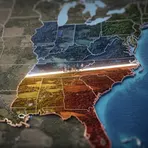
A border in the United States between Maryland and Pennsylvania that shows the usual divide between northern and southern states


 1
3.2
1
3.2
An official line that divides two areas in the same country, like New York and New Jersey
Surface Forms
Morphology
Partly transparent: the words 'Mason and Dixon's' plus 'line' signal a line associated with two people, so a B1 learner who knows the constituents can infer it refers to a boundary or dividing line. However, the precise historical referent and its symbolic meaning as the North–South divide before the Civil War are culturally specific and cannot be derived from the parts alone, so the expression is not fully transparent.
Etymology
Mason and Dixon's line comes from two men, Mason and Dixon, who in the 1760s walked and measured a straight border between Maryland and Pennsylvania. Over time people used that marked line as a clear 'boundary' and as a way to show differences between the 'North' and the 'South'. So today the name means both the actual border and a symbolic 'dividing line'.