
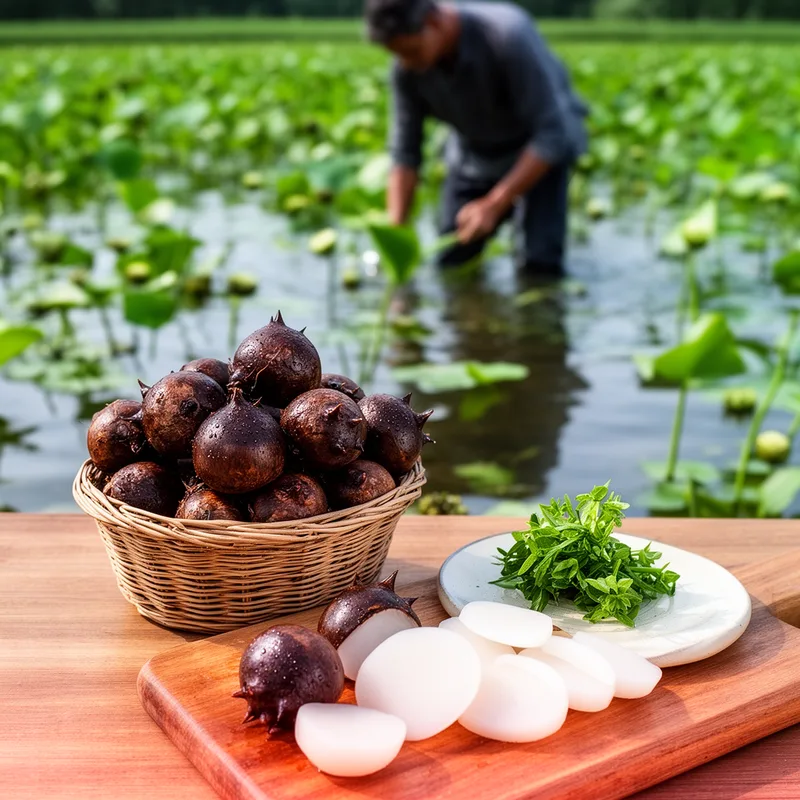
Jesuits' nut
- noun
- Archaic
- She learned to prepare a traditional dish that includes sliced Jesuits' nut and fresh herbs.
Examples
-
The Jesuits' nut is a popular ingredient in Asian cuisine.
-
The Jesuits' nut is often cultivated in ponds throughout southern Europe.
-
Local markets sometimes sell Jesuits' nut as a delicacy during the summer months.
-
Have you ever tried Jesuits' nuts in a salad?
-
Local markets sometimes sell Jesuits' nut as a delicacy during the summer months.
-
She learned to prepare a traditional dish that includes sliced Jesuits' nut and fresh herbs.
-
The Jesuits' nut is often cultivated in ponds throughout southern Europe.
Synonyms

A water plant with floating leaves and hard seeds you can eat

A plant that grows in water and makes a hard horned nut people eat
Surface Forms
Morphology
Jesuits' + nut
Knowing 'Jesuits' (members of a Catholic order) and 'nut' would only suggest a nut associated with Jesuits, not the specific botanical sense 'a variety of water chestnut.' This is a specialized, lexicalized name with cultural/historical specificity and an arbitrary link to the referent, so a B1 learner who knows the parts would not reliably derive the intended meaning.
Etymology
The noun Jesuits' nut may come from one story about Jesuit priests who grew or sold this water chestnut by their ponds. People used the priests' name (Jesuits') with the small edible part (nut), so the name came to mean 'a kind of water chestnut'.

