
Hallowe'en
 1
3.2
1
3.2

- noun
- /ˌhæloʊˈin/
- UK
- The day before All Saints was celebrated as "All Hallows Eve," and the phrase morphed into Hallowe'en or just Halloween.
Examples
-
Not even a Bewitched witch costume or I Dream of Jeannie outfit for Hallowe'en?
Blog text (12) -
She wondered what anybody would be doing for Hallowe'en.
Fiction book (1991) -
What do you do on Hallowe'en?
-
You should come over for Hallowe'en.
-
It was Hallowe'en, after all.
Fiction book (1991) -
Happy Hallowe'en, Retail Rodeo shoppers.
-
Oh, Hallowe'en is big.
-
Happy Hallowe'en.
-
Not sure we are going to bother with Hallowe'en this year; we get about two or three kids, on average, trick-or-treating, and then wind up eating the excess candy.
Blog text (15) -
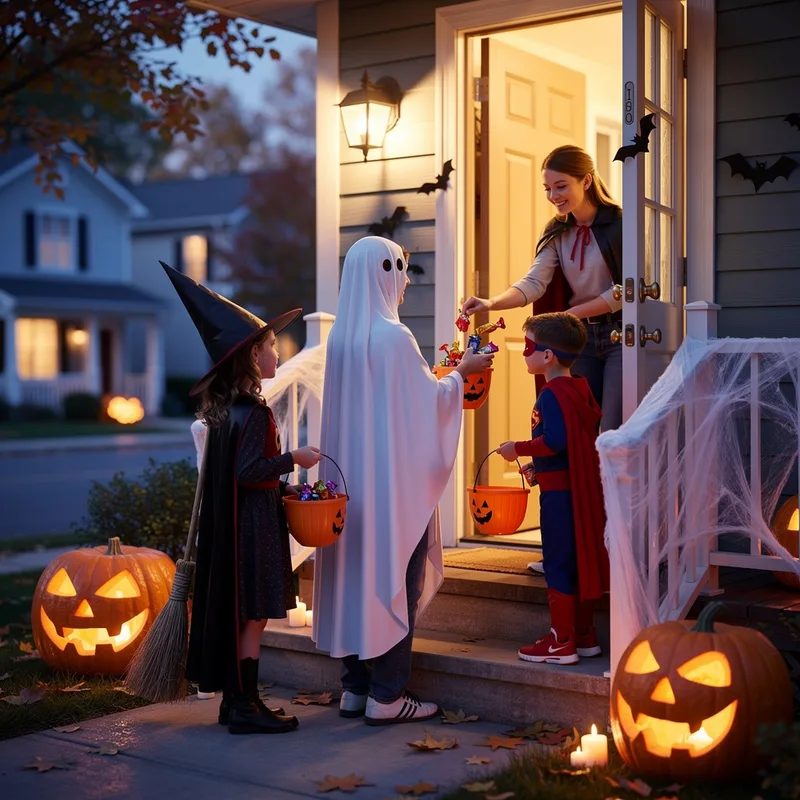
Children dress up in costumes on Hallowe'en to go trick-or-treating.
Synonyms
 641
1.0
641
1.0
The evening of October 31 when children wear costumes and go door to door for treats


 1
5.5
1
5.5
The evening before All Saints' Day when people wear costumes and children collect sweets
Surface Forms
Morphology
Etymology
Hallowe'en comes from the old name All Hallows' Eve, where hallow means 'holy' or 'saint' and e'en is short for 'evening'. So the name once meant the 'saints' evening', which helps explain why Hallowe'en is a night linked to old church customs and now mixed with costumes and treats.