
Friedreich's ataxia
- noun
- /ˈfridraɪks əˈtæksiə/
- Specialized
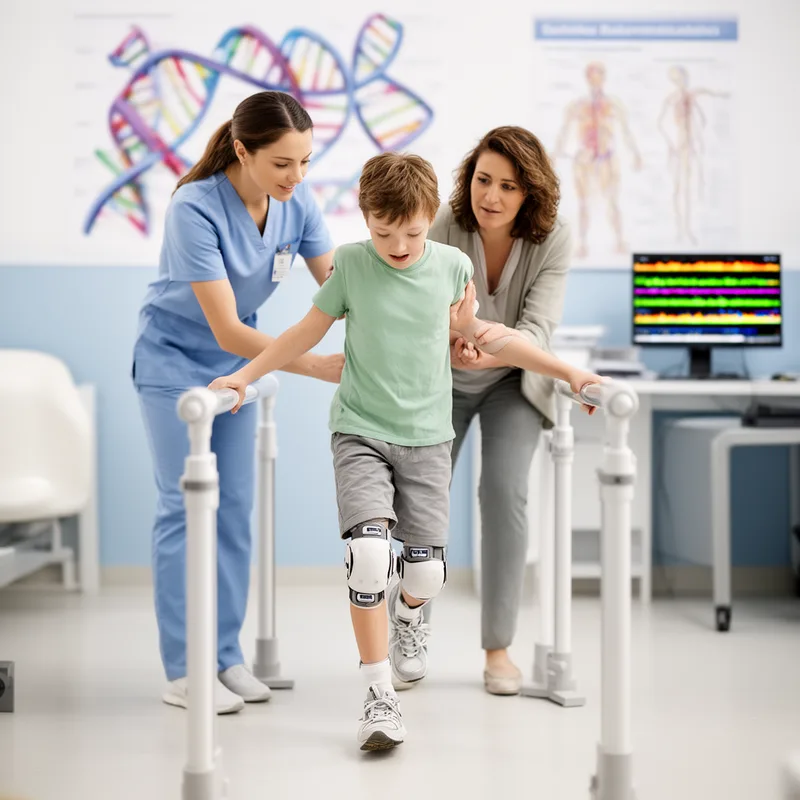
- Early symptoms of Friedreich's ataxia may include muscle weakness and problems with walking.
Examples
-
Children diagnosed with Friedreich's ataxia often experience difficulties with balance and coordination.
-
Researchers are studying Friedreich's ataxia to better understand its effects on the nervous system.
-
This happens in Friedreich's ataxia, a disease that was often mistaken for MS before MRI scans were invented.
Blog text (31)
Synonyms

A disease passed down in families that slowly damages the nerves in the spine, causing weak muscles and walking problems

A brain condition passed from parents that causes balance, walking, speech, and eye problems
Surface Forms
Morphology
Friedreich's + ataxia
A learner who knows 'ataxia' (loss of voluntary motor control) and recognizes 'Friedreich's' as a name can infer this is a specific type of ataxia named after someone, so the core notion (a form of movement/coordination disorder) is recoverable. However, clinical specifics — that it is a rare, inherited, progressive disease with typical childhood onset — cannot be derived from the constituents, so the transparency is only partial.
Etymology
Friedreich's ataxia comes from a German doctor, Nikolaus Friedreich, who in the 1800s wrote about children who walked unsteadily and became weak. That's why the name now refers to the inherited disease that causes 'loss of coordination' and 'trouble walking'.

