
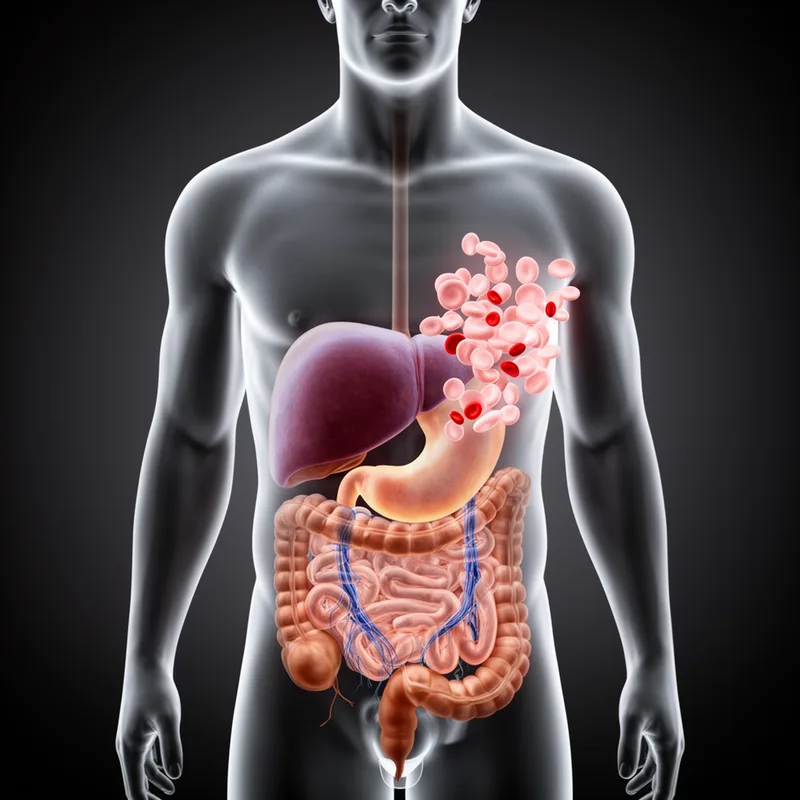
Banti's syndrome
- noun
- /ˈbæntiːz ˈsɪndroʊm/
- Specialized
- Doctors diagnosed the patient with Banti's syndrome after observing persistent splenic enlargement and anemia.
Examples
-
Treatment options for Banti's syndrome often involve managing complications from portal hypertension.
-
She has been living with Banti's syndrome for several years.
-
Advancements in medicine have improved outcomes for people living with Banti's syndrome.
-
Doctors diagnosed him with Banti's syndrome last week.
-
Doctors diagnosed the patient with Banti's syndrome after observing persistent splenic enlargement and anemia.
-
Advancements in medicine have improved outcomes for people living with Banti's syndrome.
-
Treatment options for Banti's syndrome often involve managing complications from portal hypertension.
Synonyms

An illness in which the spleen becomes very large and often causes low red blood cells or liver damage
Surface Forms
Morphology
Banti's + syndrome
This is an eponymic medical term: 'Banti's' is a proper name that carries no semantic information about the condition, while 'syndrome' only signals a set of symptoms but not which ones. Knowing the constituents therefore does not allow a B1 learner to infer the specific meaning (spleen congestion/enlargement and associated anemia/liver cirrhosis), so the expression is idiomatic/technical and unpredictable from its parts.
Etymology
Banti's syndrome gets its name from Dr. Luigi Banti, a doctor who first described the illness after seeing patients with very large spleens and liver problems, and so the condition was named after him; that's why the name refers to the disease with 'spleen enlargement' and related health issues.

