
Areopagus


 1
9.9
- proper noun
- /ˌɛəriˈɒpəɡəs/
- Willebrands wrote: "I ask myself whether the Church has ever, since the speech of the Apostle Paul on the Areopagus, approached the non-Christian religions in such a positive way."
Examples
-
Later on, when the Church begins its mission, it will occasionally note dim resemblances between Jesus and some aspects of pagan culture (as, for instance, Paul does on the Areopagus in Acts 17).
Blog text (20) -
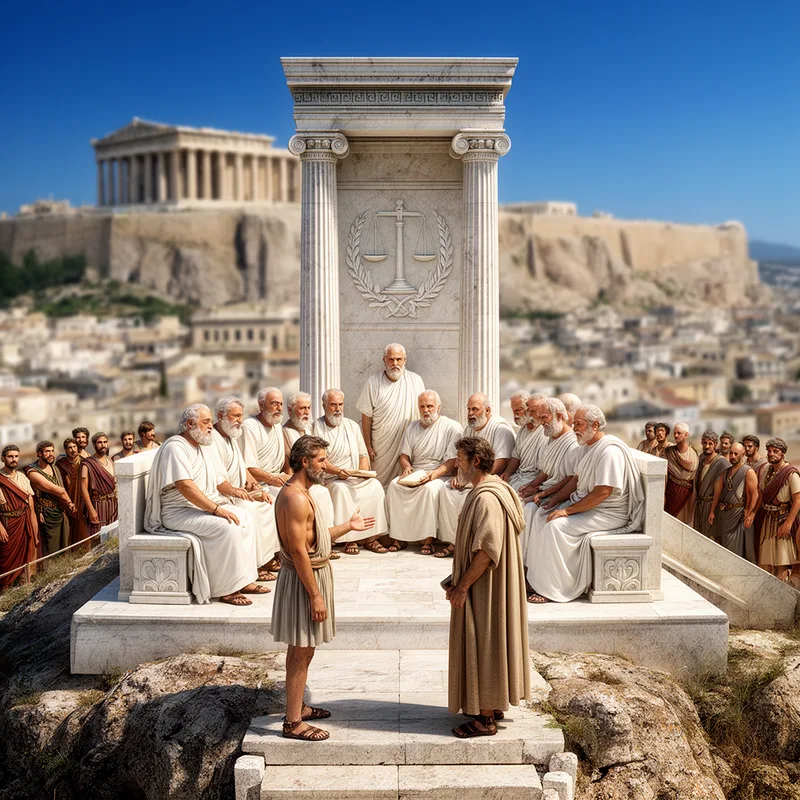
The Areopagus was known for its authority in making important legal decisions in ancient Athens.
-
The weight of the power of the Areopagus must have been enormous in this system.
-
"What is he/she talking about?" an audience might ask, as it did in Athens at the Areopagus.
Academic text (2017) -
That is the Areopagus, it was said, sort of regained the the oversight of magistrates.
-
In his encyclical on mission, he speaks of another aspect of inculturation, namely, the dialogue between the faith and the world of the so-called high culture, which he refers to as the modern Areopagus.
Academic text (2008) -
Many notable politicians served on the Areopagus, shaping the laws of the Athenian democracy.
-
In ancient Greece, the Areopagus acted as both a council and a court, handling significant judicial cases.
Surface Forms
Etymology
Areopagus comes from the Greek parts Ares 'the god of war' and pagos 'hill' or 'rock', so it literally means 'Hill of Ares'. Because Athens' highest council and later its main court met on that hill, the name came to mean the powerful governing council itself.